

Do you ever hear a native speaker use a phrasal verb and think… “Wait, what does that mean?”
You know the feeling. You’re in a meeting, watching a film, or reading an email — and suddenly there’s a phrasal verb you don’t understand. Or worse, you think you know what it means… but you’re not sure.
Maybe you paused the series to Google it. Maybe you rewound three times and still didn’t catch it. Maybe you just switched on subtitles in your own language and gave up.
Maybe you’ve tried to learn phrasal verbs before. You studied a list. You did some exercises. And a week later? You couldn’t remember any of them.
It’s not your fault.
The truth is, most people study phrasal verbs the wrong way. They try to memorise long lists. They mix up similar meanings. They learn phrasal verbs they’ll never actually use. And because nobody teaches them HOW to study properly, they forget everything within days.
So they give up. And every time a native speaker says “come across” or “put up with” or “get round to,” that familiar feeling comes back:
I should know this by now.
The biggest problem with phrasal verbs isn’t that they’re difficult.
It’s that nobody teaches them properly.
Here’s what usually happens:
Problem 1: Too many, too fast.
Most books and courses throw hundreds of phrasal verbs at you with all their meanings. “Look up” can mean five different things. “Get” has about forty phrasal verbs. Your brain gives up before you even start.
Problem 2: No system for remembering.
You study phrasal verbs on Monday. By Friday, they’re gone. You study them again. They disappear again. It’s a cycle of frustration — and it has nothing to do with your memory. It’s because you were never taught the science of how to actually move vocabulary into your long-term memory.
Problem 3: Random, not structured.
YouTube videos. Random lists. A phrasal verb here, another there. No clear order. No progression. No way to know which ones are actually useful and which ones you’ll never hear in real life.
The result? After years of studying English, phrasal verbs remain the one thing that still makes you feel like a beginner.
You can write complex emails. You can give presentations. You can read articles in English. You can even follow a film in English — mostly. But when someone says “I’ll get back to you” or “It didn’t work out” or “I can’t keep up with everything” — you’re guessing.
And when YOU try to use a phrasal verb? You hesitate. You’re not sure if you’re saying it right. So you use a formal word instead — and you know it sounds unnatural.
I know. That’s exactly why I built this challenge differently.
The reason you forget isn’t your memory — it’s the method.
In this challenge, you don’t just learn phrasal verbs once. You review them the next day. Then again after five days. Then with flashcards that I’ve created for you, based on 100 years of memory science (spaced repetition).
This layered review system means you don’t just recognise the phrasal verbs — you actually USE them. Automatically. Without thinking.
Our students say things like:
“Practising these phrasal verbs on a daily basis does really help me to internalise them and make them a part of my ‘active’ vocabulary.”
“Finally I understand how to use them and managed to remember them.”
“The game changer was your Anki deck. Without it I would not remember most of them.”
That’s not luck. That’s what happens when you study the right way.
Each lesson takes about 15 minutes. That’s it.
You watch a short video. You do the exercises. You move on with your day.
Many of our students have full-time jobs, families, and busy lives. They study on their lunch break, on the train, or before bed.
“You just take 10 minutes, five, 10 minutes and you are okay.”
And you have lifetime access — so if you miss a day (or a week), you pick up exactly where you left off. No pressure. No deadlines.
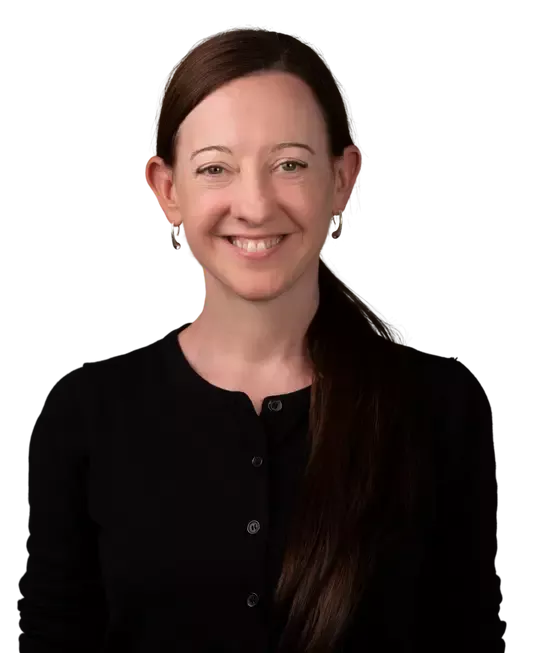
I’m Seonaid. I have a Master’s with Distinction in English and Linguistics from Cambridge, I’m a qualified British English teacher, and I’ve been helping people improve their English grammar for over 20 years.
I run Perfect English Grammar — one of the most popular English grammar websites in the world. Thousands of students from over 100 countries use our courses and challenges every month.
I created this Phrasal Verbs Challenge because I kept hearing the same thing from my students:
“Phrasal verbs are impossible.”
They’re not impossible. They just need to be taught differently. So I chose 150 of the most useful phrasal verbs, I recorded clear and simple explanations for every single one, and I built a review system based on memory science so that you actually remember them.
I also made sure that my teaching team and I are here to help you. If you have a question about any phrasal verb — you can ask us, and we’ll give you a clear, personal answer.
Module 1
Imagine opening your lesson each day and thinking: “That actually makes sense.”
Module 2
This is what makes this challenge different from everything else you’ve tried.
Module 3
For the days when you want to study without watching a video.
Module 4
You’re not learning alone.
Module 5
Something to be proud of.
A private English lesson typically costs $25–50 for just one hour.
For less than the price of a single lesson, you get:
$95
$35
One-time payment. Lifetime access forever.
The challenge is just $35 — but the bonuses won’t be here forever. Keep scrolling to see what you’ll get if you join today.
You don’t have to make the final decision now. Try the full challenge — watch the lessons, do the exercises, use the flashcards. If you don’t love it for any reason, email us within 30 days and we will refund you 100% — no problem at all!
“My speech has shaped up and it’s richer because I know lots of phrasal verbs and, very important, I know how to use them.”
“Awesome results. My US clients are bowled over by my improvement. Using these verbs has made our conversations more natural.”
“Native speakers gave me compliments about how I often use phrasal verbs speaking.”
“I’ve started using these phrasal verbs and my conversation took a higher level, especially with my UK colleagues.”
“I sound more natural in my conversations and my vocabulary is richer now.”
“I run my own business and your course definitely helps me sound more confident and natural in English.”
“I can already enjoy even more some movies and get a better understanding of Bloomberg papers.”
“It’s very nice when you don’t have to look everything up.”
You’ve learned the phrasal verbs. Now learn the words that go with them.
You’ve just learned “carry out.” But do you know what to carry out? An investigation. A plan. Research. A task. These word partnerships are called collocations — and they’re the difference between sounding correct and sounding natural.
This bonus guide gives you 50 of the most useful collocations that pair naturally with the phrasal verbs from the challenge. Each one comes with a clear explanation and example sentences you can use immediately.
This bonus alone would normally be a standalone guide. It’s included free with the challenge.
See your new phrasal verbs the way native speakers actually use them — in real conversations.
The challenge teaches you what each phrasal verb means and how to remember it. This bonus shows you how they sound in real life.
You get 10 realistic conversations — at work, with friends, on the phone, in everyday situations — packed with phrasal verbs from the challenge. Each conversation comes with a full transcript and notes explaining which phrasal verbs are used and why.
After the challenge, you’ll know the phrasal verbs. After these conversations, you’ll know exactly when and how to use them.
$95
$35
One-time payment. Lifetime access forever.
If you join the Phrasal Verbs Challenge before the timer below runs out, you’ll also get:
“I want to understand native speakers.” This is how you do it.
Normally only available inside our membership. You can’t buy it separately.
This is a complete 30-day challenge — separate from the Phrasal Verbs Challenge — designed to train your ear to understand real, fast, native English.
Every day for 30 days, you listen to a real conversation with a native English speaker — not slowed down, not simplified. Then Seonaid breaks it down for you: what they said, how they said it, and why it sounded different from what you expected.
You’ll learn to:
Each lesson includes audio, a full transcript, video explanations from Seonaid, and a mini dictation exercise — the part that really makes it stick.
“I am no longer afraid to watch English films in their original language, whereas a year ago I would literally get lost during longer dialogues.”
“It is the only course I’ve found that really helps to improve listening skills. I can understand English movies and series better.”
Think about it: after 30 days of phrasal verbs and 30 days of listening practice, you won’t just know what phrasal verbs mean — you’ll actually hear them when native speakers use them. In meetings. In films. In real conversations.
This bonus disappears when the timer hits zero:
The Phrasal Verbs Challenge will still be available after the timer — but without the Listening Challenge 2.
$95
$35
One-time payment. Lifetime access forever. Plus all three bonuses — if you join before the timer runs out.
Unlock Lifetime Access Now$95
$35
One-time payment. Lifetime access forever.