

Discover the research-based system that explains all eight conditional types
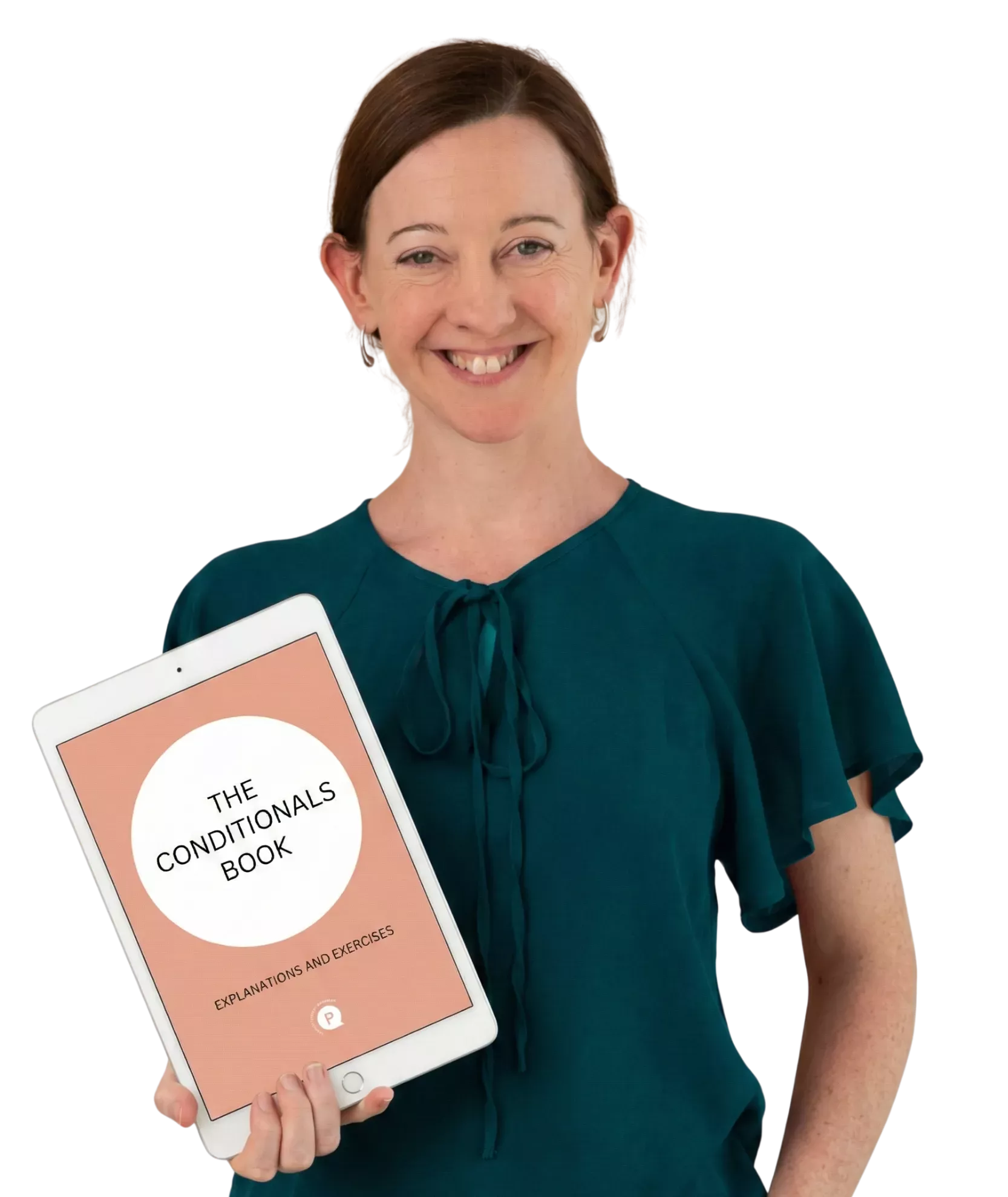
Use the advanced conditional structures that get you to C1/C2
Learn all eight conditional types (not just the four your textbook taught you)
Feel confident and sound more sophisticated and more like a native speaker

"The classic ways of zero, first, second and third conditionals made me a little confused and I didn't have confidence to use them."
Hnin, from Myanmar
You're not alone. Many students can do the exercises in their textbooks but still don't feel confident in real conversations.
The traditional "zero, first, second, third" system has been standard in textbooks since the 1960s. When I started teaching, I followed it too, like most English teachers.
But I kept finding conditionals that didn't fit. For example: "If it was cold, we stayed at home." This is clearly a conditional sentence, but it doesn't fit into any of the four traditional categories.
So I started researching.
I read academic linguistics books, textbooks, and research papers. Here's what I discovered.
According to the ELT Journal, the traditional system "is unable to account for many conditional types attested in actual usage." This means that textbooks don't explain many conditional sentences that native speakers actually use.
What's more, research in the International Journal of Learner Corpus Research found that only 57% of conditionals in EFL textbooks match the traditional system.
This means nearly half of conditional sentences don't fit into the zero, first, second, and third categories.
No wonder it's confusing!
I read about how linguists actually think about conditionals.
In academic linguistics, conditionals aren't numbered at all. They're organised by two logical principles.
This made so much more sense!
This system explains all eight types of conditionals, including the ones that aren't explained in the textbooks.
This printable PDF book takes you through all eight conditionals, step by step.
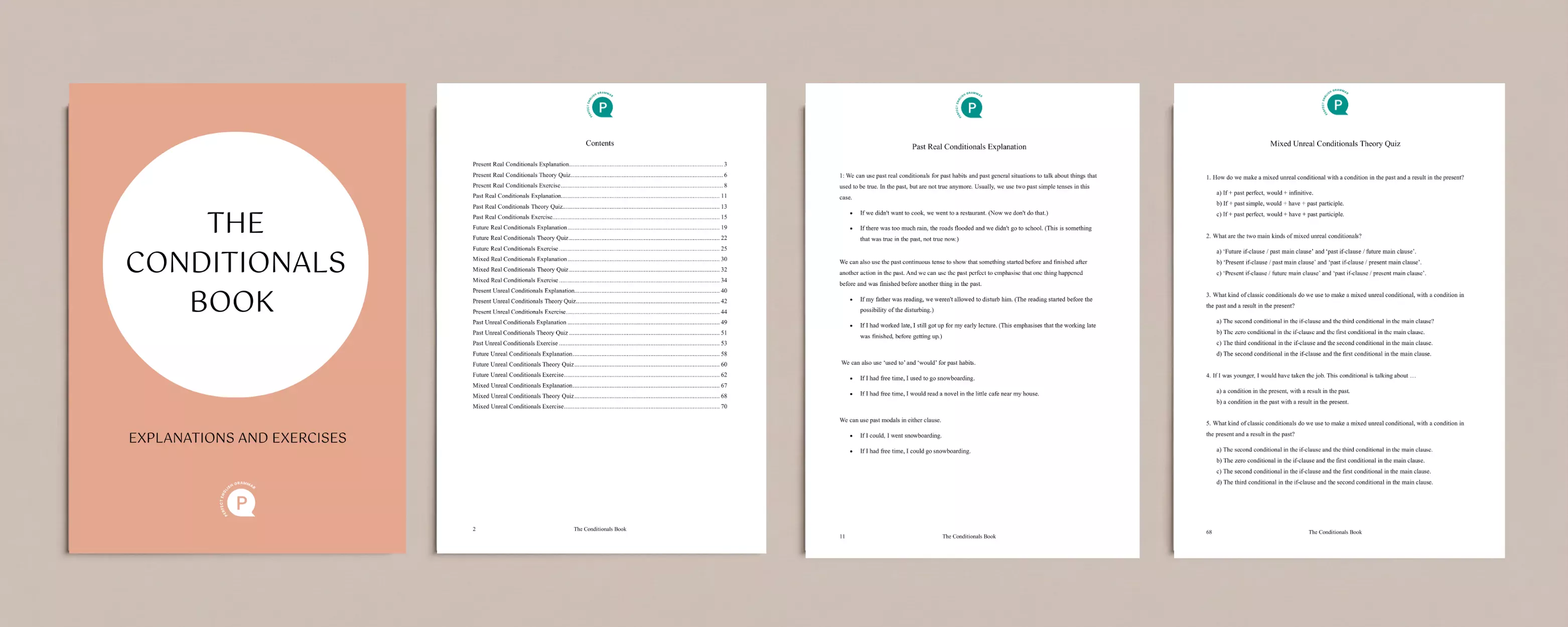
1. Clear explanations of all eight types of conditional
I explain each conditional simply and clearly. You'll understand exactly when to use it and why.
2. Theory quizzes
Short quizzes after each explanation. These help you check you've understood before you move on.
3. Lots of practice
This is the most important part! You get lots of exercises for each conditional type.
Why so many? Because this is how you really learn. You need to practise a lot to feel confident.
All the exercises have complete answer keys so you can check your work.
4. Advanced variations
For each conditional, I also show you advanced forms like:
The theory went far beyond the things I'm currently learning in school.
I think I'm less afraid of using conditionals in my speech and writing.
I had an aha moment with the unreal mixed conditionals, they are now very clear.
While doing this course I had quite a few 'aha!' moments. Now I understand all of them better and can use them more freely.
The classic ways of zero, first, second and third conditionals made me a little confused and I didn't have confidence to use them. I can use conditionals well now.
Detailed explanations, completely different approach to conditionals.

Hi, I'm Seonaid Beckwith.
I'm a British native speaker with a Master's degree (MPhil) from Cambridge University in English and Linguistics. Together with the Perfect English Grammar team, I've helped tens of millions of students improve their grammar.
I've been teaching English for many years, and I'm passionate about finding better ways to explain grammar - ways that actually make sense and are backed by research.
This book represents years of research into how conditionals work. It goes far beyond what you'll find in textbooks, with clear explanations and the complete system you need to truly master conditionals.
This book is perfect for advanced English learners (B2-C2) who:

If you don't have at least one "aha moment" like Olha, Amelia, and so many other students - just email us and we'll refund you immediately!
No questions asked.
No. This book goes far beyond the free lessons. It includes detailed explanations of mixed conditionals, advanced variations, formal structures, and hundreds of practice exercises (320 exercises total) you won't find anywhere else.
This is for advanced learners (B2-C2). You should already know the basics of English grammar and be ready to learn sophisticated conditional structures.
This is a digital PDF book that you can download immediately and read it on any device. You can also print it if you prefer.
Instead of arbitrary numbers that have no logical meaning, this system organizes conditionals by what they actually mean (real vs. unreal) and when they happen (present, past, future, mixed). It's based on how linguists analyze conditionals and how native speakers actually think about them.
Yes! Advanced conditionals are important for high scores on these exams. This book covers all the sophisticated structures examiners are looking for - including the mixed conditionals that separate B2 students from C1/C2 students.
The Conditionals Book is part of a series of four advanced grammar books:

Why not buy all four books and improve your grammar even more?
Includes:
101-page PDF
Download or print
Start immediately
Keep forever
Includes:
The Articles Book
The Conditionals Book
The Modals Book
The Tenses Book